
10 Best Things To Do in Fez
What is Fez Most Famous For?
The best things to do in Fez take visitors on a tour of craft traditions and religious heritage. The city is considered Morocco’s spiritual capital, and as such is home to several stunning madrasas, schools for the study of the Quran. It is a longtime center for the production of Moroccan handicrafts, especially leathermaking, woodcarving, and pottery.
Fez is just as busy as Marrakech, but you’ll be rubbing elbows with fewer out-of-towners and more locals. Its 9th-century medina is one of the oldest in the world and offers endless opportunities for exploration.
What are the best things to do in Fez?
1. Fez El Bali
Old traditions are alive and well inside the medina walls

Good for: History, Shoppers, Food
Fes El Bali is one of the largest and oldest medinas in the Arab world. Established in the 9th century, the UNESCO-recognized ancient city is a vast network of over 9,000 alleys bordered by large sections of the original walls. Inside are noisy souks, opulent riads, and centuries-old mosques and theological schools.
Enter through Bab Boujloud, the grandest of the old city gates, which opens onto a square of tea shops and restaurants. Whether hunting for hand-crafted treasures or sampling local dishes from streetside shops, there’s tons to explore in the old city. From here, navigate the narrow streets of the medina on your own or trust a guide to give you the lay of the land.
Open: Daily from 10 am to 8 pm

Fez El Bali
2. Al Attarine Madrasa
Astounding richly ornamented architecture
Good for: History, Photo
Of the 3 madrasas built in Fez between the 13th and 15th centuries, Al Attarine Madrasa boasts the most ornate and elegant design. It takes its name, “the madrasa of the perfumers,” from its location near the spice and perfume souk, although the school’s serene atmosphere is a welcome contrast with the busy market.
In use until the early 20th century, Al Attarine Madrasa remains a historic landmark and testament to Islamic craftsmanship. The central courtyard is a masterpiece, with onyx columns supporting delicately carved cedar arches and walls covered in zellige mosaic tilework. Take the time to look closely and discover striking details, like floral stucco carvings and phrases from the Quran inscribed along the walls.
Location: Rue Talaa Kebira, Fes 30110, Morocco
Open: Daily from 10 am to 5 pm
Phone: +212 6102-71328
Al Attarine Madrasa
3. Jnan Sbil Garden
A shady spot beneath the poplar trees
Good for: Photo, Families, Couples
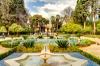
The green gardens of Jnan Sbil are a great spot to cool off between exploring the medina and the Mellah, Fez’s Jewish quarter. The well-maintained gardens host over 3,000 plant species, including native poplar and orange trees, a cactus garden, and a bamboo grove.
Find this little oasis a short walk beyond the Bab Boujloud gate, along the Oued Fez river. Its paths pass through flower gardens and are lined with shaded benches. Although the gardens were planted in the 19th century, the park holds a few older treasures, including 2 noria (ancient waterwheels) and a 16th-century Saadian bastion. Join the locals by the garden pond around golden hour to savor the sunset.
Open: Tuesday–Sunday from 8.30 am to 5.30 pm (closed on Mondays)
Jnan Sbil Garden
4. Nejjarine Museum of Wooden Arts & Crafts
Handcrafted treasures and rooftop views
Good for: History, Photo
The Nejjarine Museum showcases the myriad forms of Morocco’s fine woodwork. Housed in a 3-floor 18th-century inn, the small but fascinating museum introduces visitors to the art of wood craftsmanship from the tree to the final product, weaving the history of Morocco into the history of the craft.
Pieces on display include everything from rudimentary musical instruments to ornamental doors carved in mesmerizing detail. Woodworking was used for everyday objects like prayer beads and teachers’ desks, as well as ornate cabinets and decorative pieces for mosques and madrasas. Tools used to treat and shape the wood are also displayed. Conclude your visit with an espresso at the rooftop cafe, which offers medina views.
Location: Place an Nejjarine, Fes 30110, Morocco
Open: Daily from 10 am to 5 pm
Phone: +212 5314-12616
Nejjarine Museum of Wooden Arts & Crafts
5. Chouara Tannery
Ancient methods still in practice
Good for: History, Unusual
Fez’s Chouara Tannery is one of the oldest in the world. It continues to use medieval methods to process its animal hides, which are transformed over 4 to 5 weeks into the soft, pliable leathers sold in the souks. View the tannery from the rooftops, accessed via the surrounding leather shops.
While there is naturally an odor, you can visit early in the morning and bury your nose in a bundle of fresh mint for a more pleasant experience. The tannery pools are a striking patchwork of natural tones, with the blue dyes made from indigo, the red from paprika, and the yellow from turmeric or saffron. Join the tour to learn the steps in the treatment and dying process.
Location: Rue Chouara, Fes 30110, Morocco
Open: Daily from 9 am to 7 pm
Phone: +212 6201-44404
Chouara Tannery
6. Hammam Mernissi & Spa
A Moroccan wellness tradition
Good for: Luxury, Couples, Families
Head to Hammam Mernissi & Spa to experience the ritual of hammam, an integral part of Moroccan culture. The facilities include cold and warm rooms, a hot plunge bath, and a huge sauna. Specialists offer massages and scrubs that leave visitors with relaxed muscles and baby-soft skin. Mud facials, black soap scrubs, and full body washes with clove and rose-scented ghassoul clay are some of the more popular treatments.
The atmosphere at the hammam is casual and communal, as locals habitually make their weekly visit to bathe, relax, and chat with friends and family. Men and women use separate facilities, and most bathe in the nude. You can bring your own robe and slippers or borrow them from the spa.
Location: 46 Serrajin Bab Boujloud, Fes 30120, Morocco
Open: Daily from 11 am to 8 pm
Phone: +212 6243-01030
Hammam Mernissi & Spa
7. Bou Inania Madrasa
A masterpiece of Marinid architecture
Good for: History, Photo
The green-tiled minaret of the 14th-century Bou Inania Madrasa is one of the first things you’ll see upon entering the medina through Bab Boujloud gate. This madrasa offers the rare opportunity for visitors to enter a theological college still operating much as it did half a millennium ago. Although the students’ quarters and prayer rooms are off limits, the madrasa is worth visiting if only to see its majestic central courtyard.
The spacious, arcaded courtyard is bordered by keyhole arches and paved with marble. High walls are covered in stunning zellige tilework and intricate sculpted panels. Enjoy the blissful silence in the madrasa, save for occasional calls to prayer from the adjoining mosque.
Location: Rue Talaa Sghira, Fes 30120, Morocco
Open: Daily from 9 am to 5 pm
Bou Inania Madrasa
8. Place Seffarine
Copperware, mint tea, and an ancient library
Good for: History, Shoppers
Place Seffarine is a small square in the medina that’s home to many of Fez’s coppersmiths. The metallic ringing resounds through the square as craftsmen hammer away at copper and pewter trays and teapots. This is an excellent spot to pick up a piece for the home and watch the masters at work.
The square also houses the entrance to the Al-Qarawiyyin Library. Opened in 859, the library was only recently renovated and reopened to the public after centuries of disuse. Its collection of rare texts includes ancient manuscripts on theology and astronomy, and a 9th-century Quran. Follow your visit with a pot of mint tea at the beloved Abdullah Thé & Café.
Location: Place Seffarine, Fes 30110, Morocco
Place Seffarine
9. Mellah
A historic enclave that preserves Moroccan Jewish history
Good for: History, Photo
Established in the 15th century, the Mellah of Fez was Morocco’s first Jewish quarter. This is a less-visited part of the city that will be of great interest to history buffs and anyone craving a space to explore free of the medina crowds.
Of the 17 synagogues that once stood in the Mellah, only 2 remain, including the family-run Aben Danan Synagogue. Enter through a nondescript door into the simple, lantern-lit sanctuary where visitors can learn the history of the Jewish population in Morocco. In the basement is a mikveh bath used for the purification rite. Walk to the southern side of the Mellah to see the Jewish Cemetery, which houses some 22,000 graves covered with whitewashed tombstones.
Mellah
10. Ain Nokbi
The home of ceramics ateliers
Good for: Shoppers, History
Beyond the medina’s eastern gates is the newer district of Ain Nokbi, known for its ceramics production. You will have undoubtedly seen countless patterned zellige tiles and brightly glazed tagines while galivanting around the city. This neighborhood is where visitors can take a peek behind the curtain of the Moroccan art of crafting gorgeous yet functional ceramics.
Art Naji offers free tours of their facilities, in which guides offer a glimpse into each phase of production. Observe craftspeople hand-cutting clay for zellige tiles, throwing pots on the wheel, and glazing with natural dyes. When selecting a souvenir, select a piece glazed in white and cobalt blue, the hallmark colors of Fez ceramics.
Ain Nokbi
This article includes opinions of the Go Guides editorial team. Hotels.com compensates authors for their writing appearing on this site; such compensation may include travel and other costs.